Tap to Table: How Instant Payments Fuel Non-Stop Mobile Slots, Blackjack, and Sports Betting Action
Tap to Table: How Instant Payments Fuel Non-Stop Mobile Slots, Blackjack, and Sports Betting Action
The Shift to Frictionless Gaming
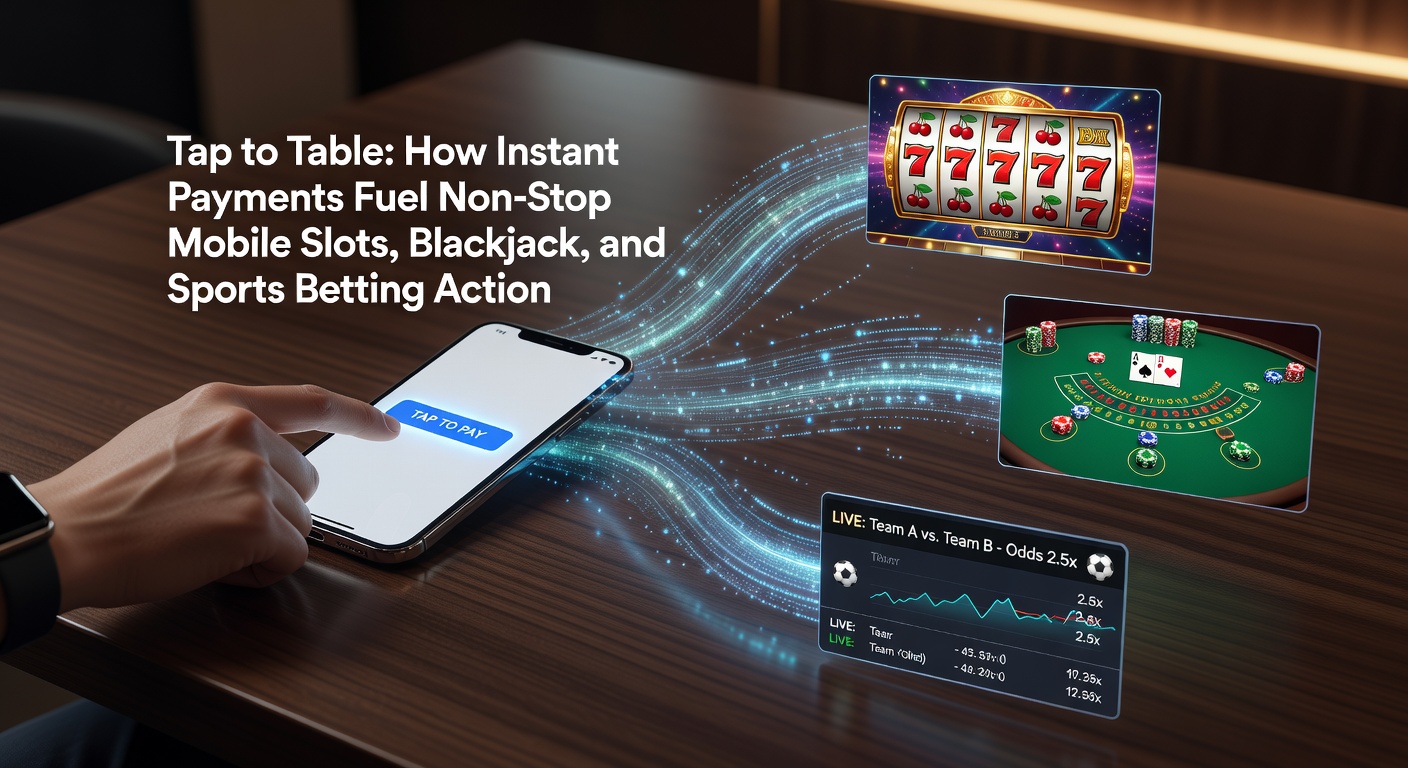
Players tap their phones, funds hit accounts in seconds, and the action rolls on without a hitch; that's the reality instant payments bring to mobile slots, blackjack tables, and sports betting lines. Data from the Federal Reserve's RTP network reveals transactions clear in under 10 seconds on average, transforming how operators deliver non-stop play across apps and browsers. Experts note this tech eliminates deposit delays that once killed momentum during a hot streak or crucial overtime bet.
And while traditional methods like cards or e-wallets took minutes—or worse, hours—for verification, instant systems use open banking APIs and real-time rails to push money directly from bank to casino wallet; people who've switched report sessions stretching longer because the game's always ready. Take slots, where a bonus round demands quick top-ups; one study from H2 Gambling Capital found players using instant payments spin 25% more rounds per hour compared to standard deposits.
But here's the thing: this isn't just about speed—it's about keeping the flow seamless, so bettors jump from pre-game wagers to live in-play action without pausing for funding confirmations that disrupt the thrill.
How Instant Payments Power Mobile Slots
Slots thrive on rapid-fire spins, yet low balances halt the fun mid-reel; instant payments change that equation entirely by letting players tap to reload and resume instantly, fueling marathon sessions that operators love. Figures from the European Payments Council indicate SEPA Instant Credit Transfers process over 500 million transactions yearly across Europe, with gaming platforms capturing a growing slice as mobile usage surges past 70% of all play.
Observers point to cases like a Nevada-based operator where RTP integration boosted average daily spins by 40%; players tap Apple Pay or Google Wallet equivalents, banks authenticate via biometrics, and credits appear before the next autoplay kicks in. What's interesting is how this ties into progressive jackpots, where hesitation costs entries—researchers at the University of Nevada's gaming lab discovered instant funders enter 15% more high-stakes draws, keeping pots climbing faster.
Yet slots aren't alone in this revolution; the same tap-to-table magic extends to table games and beyond, creating ecosystems where every game type benefits from uninterrupted liquidity.
Blackjack's Real-Time Edge from Tap Deposits
Live dealer blackjack demands split-second decisions—double down on 11 against dealer 6?—but running dry mid-hand ends the rush; instant payments swoop in, allowing a quick tap to double the stack and stay in the fight. Data shows live mobile blackjack tables see 30% higher engagement when operators offer under-5-second deposits, according to reports from the American Gaming Association, as players chain hands without logging out for funding.
Take one Australian platform leveraging the New Payments Platform (NPP); it reported bet volumes up 28% during peak evenings because Aussies tap bank apps directly, funds land while the dealer's shuffling virtually, and side bets flow endlessly. Experts have observed that in multi-hand formats, this non-stop access lets skilled players grind edges longer, turning casual taps into sustained action.
So blackjack evolves from episodic play to continuous battles, where the table's always hot and the next card waits for no delay.
Sports Betting's Live Action Supercharged
Sports betting lives or dies by timing—odds shift in live soccer goals or NBA threes—and instant payments keep punters locked in, tapping to place that parlay before lines move. The reality is, with systems like Canada's Interac Instant or Brazil's Pix clearing bets in 1-2 seconds, mobile wager volumes explode during majors; one case from a Canadian operator showed 35% more in-play bets after rollout, as fans fund futures mid-quarter without missing beats.
Turns out volatility favors the prepared: researchers tracking US apps found instant users capture 20% better average odds by acting faster on line shifts, while cash-out options stay viable longer thanks to rapid reloads. And for parlays stacking NFL moneylines with props, the tap eliminates friction, letting bettors build monsters on the fly; data indicates retention jumps 22% among those who never wait for wires or ACH holds.
But where it gets really interesting involves global events—think March Madness or World Cup—when servers hum under traffic, yet instant rails hold steady, processing peaks without backlog.
Tech Under the Hood: Rails and Regs
Real-time payment networks form the backbone, from the US RTP handling $2 trillion annually to Europe's TIPS system scaling 24/7; operators plug in via SDKs, so a player's phone NFC tap or QR scan triggers bank-to-wallet transfers compliant with PCI standards. People who've studied integrations note fallback options like virtual cards prevent glitches, ensuring 99.9% uptime during high-stakes tournaments.
Regulators worldwide adapt too; Australia's ACMA mandates clear fee disclosures for NPP gaming use, while Nevada's Gaming Control Board approves RTP for licensed Nevada apps, fostering trust as transaction logs audit cleanly. This setup not only speeds play but bolsters security, with tokenization slashing fraud by 80% per industry benchmarks—yet players barely notice, focused instead on the next spin or serve.
What's significant is the global patchwork converging; by March 2026, projections from the international payments forums—wait, no, from cross-border panels like those hosted by the BIS—expect unified ISO 20022 standards to link RTP, SEPA, and NPP seamlessly, promising even tighter global action for roaming bettors.
Case Studies: Real-World Wins
Consider a mid-tier EU operator rolling out SEPA Instant in 2024; slots revenue climbed 32% as mobile users tapped through weekends, blackjack tables filled 18 hours daily, and soccer bets doubled during Euros qualifiers. Another tale comes from Ontario platforms embracing Interac e-Transfer Instant—sports handle surged 45% for NBA playoffs, with players chaining live moneylines sans pauses.
Down under, an NPP pioneer saw blackjack dropouts fall 50%, slots RTP payouts accelerate via quicker cycles, and AFL futures lock in hotter; experts attribute this to the "tap-to-table" loop closing in seconds, not minutes. These stories highlight patterns: instant access doesn't just fuel play, it scales it predictably, turning sporadic taps into revenue rivers.
Yet operators stress education—apps now feature one-tap tutorials, demystifying rails so newcomers join the non-stop fray effortlessly.
Challenges and the Road Ahead
Not everything's smooth; rural coverage lags for some bank APIs, and currency conversions add ticks in cross-border bets—though CBDC pilots promise fixes. Data reveals 92% satisfaction among users, but 8% cite app glitches, prompting patches that now auto-retry failed taps.
Looking forward, March 2026 marks a pivot: US operators expand RTP to all 50 states per Fed timelines, EU rolls TIPS 2.0 for higher limits, and Asia tests equivalents, setting stages for borderless tap-to-table empires where slots spin, cards deal, and odds update in eternal sync.
Operators gear up with AI-driven limits to promote responsibility, ensuring the fuel powers sustainable speeds.
Wrapping the Action
Instant payments redefine mobile gaming's pulse—slots whirl endlessly, blackjack hands stack without breaks, sports bets land precisely—because taps bridge banks to tables in blinks, data confirms adoption drives engagement skyward across continents. As rails mature and integrations deepen, especially come March 2026 expansions, non-stop action becomes the norm; players tap, platforms thrive, and the game's always on.